Episode 8: Sampling aur Testing

Topic 1: Audit sampling kya hai?

Real example: retail inventory - Walmart aur America ka retail shrink


1. Kahani hook: Chawal ke bora aur ek muthhi

Prabhat ke ghar par naya chawal mangaya gaya, 25 kilo ka bora. Prabhat ki daadi ne bora khola, upar se ek muthhi chawal li, haath mein ragda, danedar dekha, khushboo sunghi, aur boli, "Chawal theek hai, poora bora achha hai."

Prabhat hairan hua. "Daadi, aapne sirf ek muthhi dekhi. Poora 25 kilo kaise pakka kiya?"

Daadi hansi. "Beta, muthhi upar se nahin, maine borra hila kar, alag jagah se li. Agar har muthhi same nikle, to poora bora same hota hai. Har daana dekhoon to raat nikal jaayegi."

Agle din Prabhat ne yeh sawaal Iksha se poocha. Iksha ne table par haath rakha. "Prabhat, tumhari daadi auditor hain aur unhein pata bhi nahin. Unhone sampling kiya: poori population (25 kilo chawal) mein se ek sample (muthhi) check karke poori population ke baare mein conclusion nikala. Auditor bhi yahi karta hai. Ek company mein lakhon transactions hote hain; auditor har ek ko check nahin kar sakta. Woh sample chunta hai, test karta hai, aur usi se poori books ke baare mein opinion deta hai."

Prabhat: "Par Iksha, agar sample mein galti chhoot gayi to?"

Iksha: "Wohi to is chapter ka dil hai. Sample sahi chunna, uska size sahi rakhna, aur result ko sahi padhna. Galat sample se auditor jhoothi tasalli le leta hai, jaise Wirecard ke auditors ne li thi. Aur sahi sample se duniya ke sabse bade retail stores ka stock check hota hai, jahan ek-ek item ginna namumkin hai. Chalo shuru karte hain."


2. Chat dialogue: topic by topic

Topic 1: Audit sampling kya hai?

PrabhatIksha, sampling ki pakki definition?
IkshaAudit sampling ka matlab: population ke 100% se kam items par audit procedures lagana, aise ki har sampling unit ko chune jaane ka chance ho, taaki sample se poori population ke baare mein conclusion nikala ja sake. Yeh SA 530 (Audit Sampling) ka concept hai.
PrabhatPopulation kya hai?
IkshaWoh poora set jis par auditor conclusion chahta hai. Jaise ek saal ki saari sales invoices, ya saare debtors, ya poora stock. Population kaunsi hai, yeh auditor ka objective tay karta hai.
PrabhatAur sampling unit?
IkshaPopulation ke individual pieces: ek invoice, ek debtor, ek stock item. Jo bhi auditor physically test karega, wahi sampling unit hai.
PrabhatKab sample, kab 100%?
IkshaTeen cases mein 100% check karna better hai: (1) population chhoti ho, (2) kuch items itne bade hon ki unhe chhodna risk ho, jaise 10 transactions jo total value ka 60% hain, unhe hamesha check karo, (3) risk bahut high ho aur sample se answer na mile. Baaki sab jagah sampling chalti hai.
PrabhatMatlab sampling audit ka shortcut hai?
IkshaShortcut nahin, professional technique hai. Shortcut tab banta jab sample galat ho. Sahi sampling statistics par khadi hoti hai.

6 saal ka bachha box: Daadi ki chawal wali muthhi. Poora bora khol kar har daana dekhna = 100% check. Ek hati hui muthhi dekhna = sampling.

PhD box: SA 530 ke under sample design karte waqt auditor objective, population, sampling unit, aur tolerable misstatement define karta hai. Selection method aisa hona chahiye ki har unit ko selection ka chance mile, isliye haphazard ya judgment-only selection statistical sampling nahin ban sakta. Sampling substantive tests (details) aur tests of controls dono mein use hota hai, par risk assessment procedures (SA 315) mein sampling relevant nahin hoti.


Topic 2: Sampling risk aur non-sampling risk

PrabhatIksha, sample se galat conclusion ka khatra?
IkshaUsi ko sampling risk kehte hain. Do roop hain. Tests of controls mein: (1) auditor soche control achha hai jabki asal mein kharab hai (risk of assessing control risk too low), (2) auditor soche control kharab hai jabki achha hai (too high). Pehla wala audit ko ineffective banata hai, doosra inefficient.
PrabhatAur substantive testing mein?
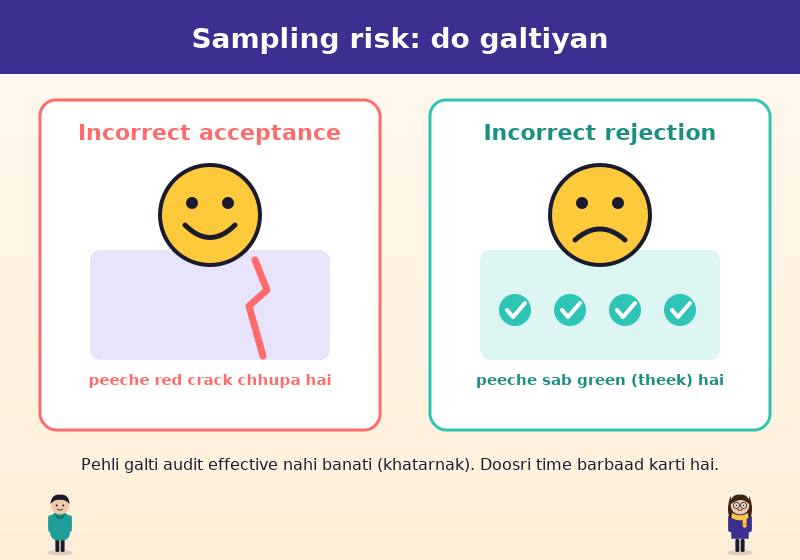
IkshaDo roop wahan bhi: (1) risk of incorrect acceptance - auditor soche sab theek jabki material misstatement hai. Yeh sabse khatarnak hai kyunki galat clean opinion nikal sakta hai. (2) risk of incorrect rejection - auditor soche galti hai jabki theek hai. Isse extra kaam badhta hai par opinion safe rehti hai.
PrabhatAur non-sampling risk?
IkshaWoh risk jo sample se nahin, auditor ki apni galti se aata hai: galat procedure chunna, evidence galat padhna, ya fraud ka document pehchan na paana. Yeh sample kitna bhi bada ho, kam nahin hota. Isko sirf training, supervision aur quality control se kam kar sakte ho.
PrabhatKaunsa risk zyada dangerous?
IkshaIncorrect acceptance aur control risk ko low assess karna. Dono mein auditor ko jhoothi tasalli milti hai. Audit efficiency ki galti theek ho jaati hai, effectiveness ki galti opinion ko duba deti hai.

6 saal ka bachha box: Tumne dabbe se 3 biscuit nikale, sab acche, aur bola "saare acche hain." Agar bich mein kuch sade hue the aur tumhari muthhi mein nahin aaye, tum galat bole: yeh sampling risk hai. Agar biscuit achha tha par tumne use sada samajh liya: yeh non-sampling risk hai.

PhD box: Statistical sampling mein sampling risk ko quantify kiya ja sakta hai (confidence level = 1 minus sampling risk). Non-statistical (judgmental) sampling mein sampling risk measure nahin hota, sirf judgment se control hota hai. Incorrect acceptance practically beta risk jaisa hai; auditors typically 5-10% risk levels par kaam karte hain jab control reliance low ho.


Topic 3: Statistical vs non-statistical sampling

PrabhatIksha, statistical aur non-statistical sampling mein fark?
IkshaStatistical sampling mein random selection hoti hai aur probability theory se result evaluate hota hai; sampling risk numerically measure hota hai. Non-statistical (judgmental) sampling mein auditor apne experience se items chunta hai; risk measure nahin hota.
PrabhatKaunsi better?
IkshaDono acceptable hain SA 530 mein. Statistical zyada defensible hai, size scientifically nikalta hai. Judgmental chhote audits mein practical hai. Par ek baat: judgmental mein bhi selection itna unbiased hona chahiye ki representative lage.
PrabhatExam ke liye fark table?
IkshaYaad rakho: statistical = random + measurable risk + fixed formula se size. Judgmental = auditor ki choice + risk unmeasured + size experience se. Dono mein documentation zaroori hai.

PhD box: Statistical sampling ke do streams: attributes sampling (controls ke liye, deviation rate measure karta hai) aur variables sampling (substantive, monetary misstatement estimate karta hai). Variables sampling ke methods: mean-per-unit, difference estimation, ratio estimation, aur monetary unit sampling (MUS/PPS), jisme har rupaya ek sampling unit hai aur bade items ke select hone ka chance zyada hota hai.


Topic 4: Sample selection ke methods

PrabhatIksha, items chunne ke tareeke batao.
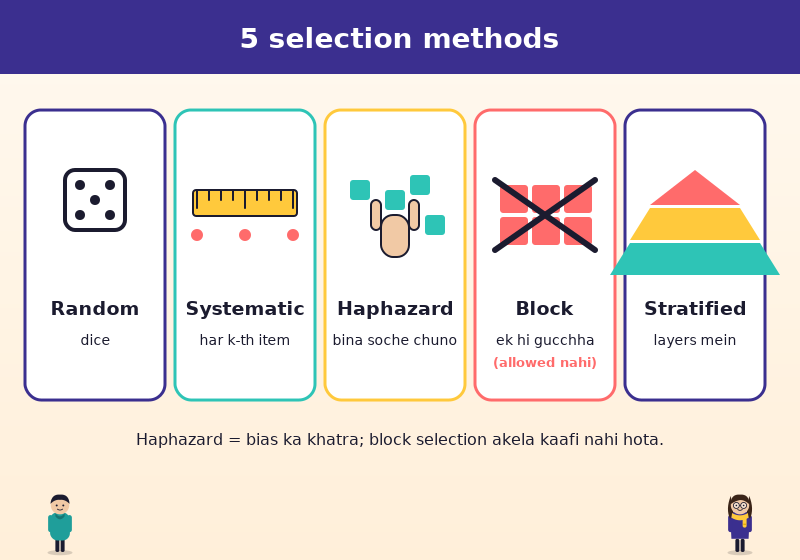
IkshaPaanch main methods. Pehla, random number selection: random number table ya software se numbers nikaalo, un numbers ki entries uthao. Sabse pure method.
IkshaDoosra, systematic selection: population ko sample size se divide karke interval nikaalo, jaise har 50vi entry. Shuruat random honi chahiye. Dhyan rahe population mein koi pattern na ho jo interval se takra jaye, jaise har 50vi entry hamesha ek hi clerk ki ho.
IkshaTeesra, haphazard selection: auditor bina kisi structured bias ke chunta hai, har unit ko chance milta hai. Par yeh statistical sampling nahin hai kyunki probability measure nahin hoti.
IkshaChautha, block selection: ek time period ya sequence ke saare items, jaise sirf August mahine ki saari entries. Yeh sample representative nahin hota, isliye audit sampling ke liye aam taur par manzoor nahin. SA 530 bhi block selection ko appropriate nahin maanta.
IkshaPaanchva, stratified / value-weighted selection: population ko value ke hisaab se layer (strata) mein baanto, bade items ko 100% check karo, chhote items se sample lo. Monetary unit sampling isi family ka hai.
PrabhatSabse zyada practical kaunsa?
IkshaBade audits mein MUS aur systematic random. Chhote mein haphazard plus bade items ka 100% cover. Funda: bade rupaye pehle pakdo, phir baaki par sample.

6 saal ka bachha box: Sabzi mandi mein aloo chunna: aankh band karke kahin se bhi uthana = random. Har teesre thele se ek aloo = systematic. Sirf pehle thele ke saare aloo = block (galat, kyunki baaki thele ka pata hi nahin chala).


Topic 5: Sample size kaise decide hota hai?

PrabhatIksha, kitne items check karoon? Yeh kaise tay hota hai?
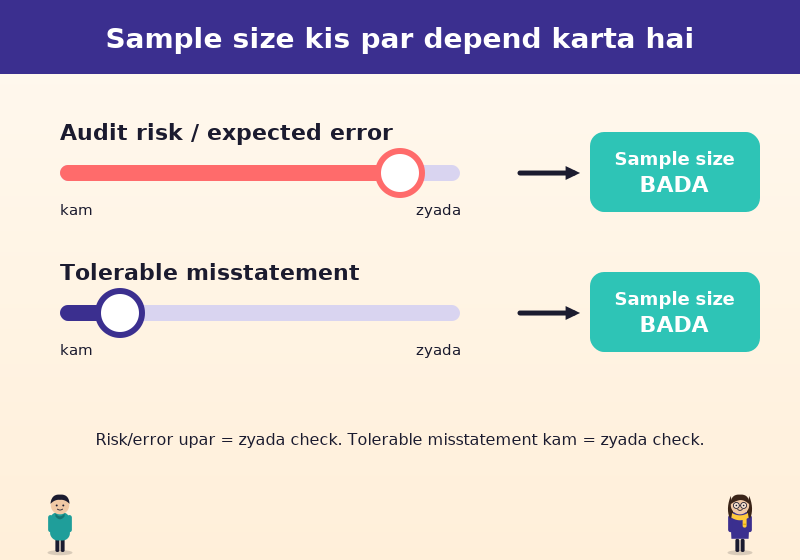
IkshaChaar factors. Pehla, risk jitna zyada, sample utna bada. Client ka internal control kamzor hai to sample badao. Doosra, tolerable misstatement jitna chhota, sample utna bada. Tolerable misstatement woh maximum galti hai jo auditor phir bhi accept kar sakta hai.
IkshaTeesra, expected misstatement jitni zyada, sample utna bada. Past experience mein galtiyan milti aayi hain to aur items check karo. Chautha, population ka size bhi matter karta hai, par surprisingly kam; badi population mein bhi sample size bahut zyada nahin badhta agar risk same ho.
PrabhatEk formula hai?
IkshaStatistical sampling mein confidence level, tolerable rate aur expected rate se tables/formulas hain. Judgmental mein auditor ka experience. UPSSSC ke liye itna yaad rakho: risk badhe to sample badhe, tolerable error ghate to sample badhe.
PrabhatAgar sample mein galti mile to?
IkshaTeen options: galti ko investigate karo, nature samjho (ek-anamoly hai ya system ki problem), phir ya to sample badao ya poori population par projection nikalo. Galti ko ignore karna allowed nahin.

PhD box: Attributes sampling mein sample size nikalne ka formula confidence factor par based hai; MUS mein sample size = population book value x confidence factor / tolerable misstatement. Sample mein mili misstatements ko population par project karte hain, aur projected misstatement plus sampling allowance tolerable misstatement ke andar honi chahiye. Isse "precision gap widening" ya incremental allowance kehte hain classical approach mein.


Topic 6: Tests of controls vs substantive tests (compliance vs substantive)

PrabhatIksha, sampling kahan-kahan lagti hai?
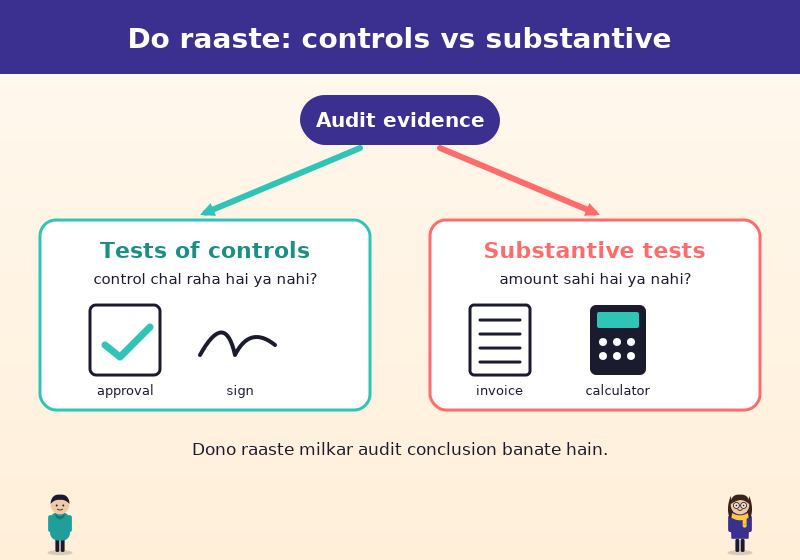
IkshaDo bade tests mein. Pehla, tests of controls (purane Indian textbooks mein compliance tests): yeh dekhte hain internal control chal raha hai ya nahin. Jaise har purchase bill par manager ki sign hai ya nahin. Result hota hai: deviation rate, kitne percent cases mein control fail hua.
PrabhatAur doosra?
IkshaSubstantive tests: yeh seedha figures ki sachai check karte hain. Do type: (1) tests of details - invoices, balances ka sample check karna, (2) analytical procedures - ratios aur trends se unusual pattern pakadna, jaise is saal sales 40% badhi par market flat hai, kyun?
PrabhatDono mein sampling alag kaise?
IkshaTests of controls mein hum rate dekhte hain (kitne percent mein sign missing), isliye attributes sampling. Substantive details mein hum amount dekhte hain (kitne rupaye ki galti), isliye variables ya monetary unit sampling.
PrabhatControls achhe nikle to?
IkshaTo substantive testing kam kar sakte ho, kyunki system par bharosa hai. Controls kharab nikle to substantive testing badha do. Yeh audit ki economy hai: jahan system strong, wahan kam kaam; jahan weak, wahan zyada.

PhD box: Yeh relationship audit risk model se juda hai: Audit Risk = Inherent Risk x Control Risk x Detection Risk. Controls reliable hon to control risk low, to detection risk zyada accept kar sakte hain, matlab chhota substantive sample. SA 330 (responses to assessed risks) isi balance ko govern karta hai.


Topic 7: Routine checking, test checking aur audit in depth

PrabhatIksha, UPSSSC ke purane papers mein "test checking" bahut aata hai. Woh kya hai?
IkshaIndian exam language samjho. Routine checking: books ke arithmetical checks, casting (totals), posting, balancing, carry forward. Yeh mechanical checking hai. Test checking: transactions ka ek representative sample deeply check karna, aur uske basis par baaki ko accept karna. Yeh practical sampling hai.
PrabhatTest checking kab mat karo?
IkshaJab control weak ho, jab cash transactions zyada hon, jab staff naya ya unreliable ho, ya jab client bahut chhota ho aur 100% check sasta pade. Bank, trust jaisi jagah test checking risky hai.
PrabhatAur "audit in depth"?
IkshaEk transaction ko shuru se aakhir tak trace karna, har document par. Jaise ek sale: customer order, invoice, dispatch, gate pass, ledger entry, receipt, bank deposit. Depth checking auditor ko system ki real working samjhati hai. Aam taur par har area ki kuch transactions depth mein check ki jaati hain.
PrabhatTeeno ka combination?
IkshaRoutine checking se arithmetic pakdo, test checking se coverage lo, depth checking se system samjho. Teen mil kar ek balanced audit banta hai.

Topic 8: Retail inventory ka example chat - Walmart

PrabhatIksha, retail mein sampling ka asli use dikhao.
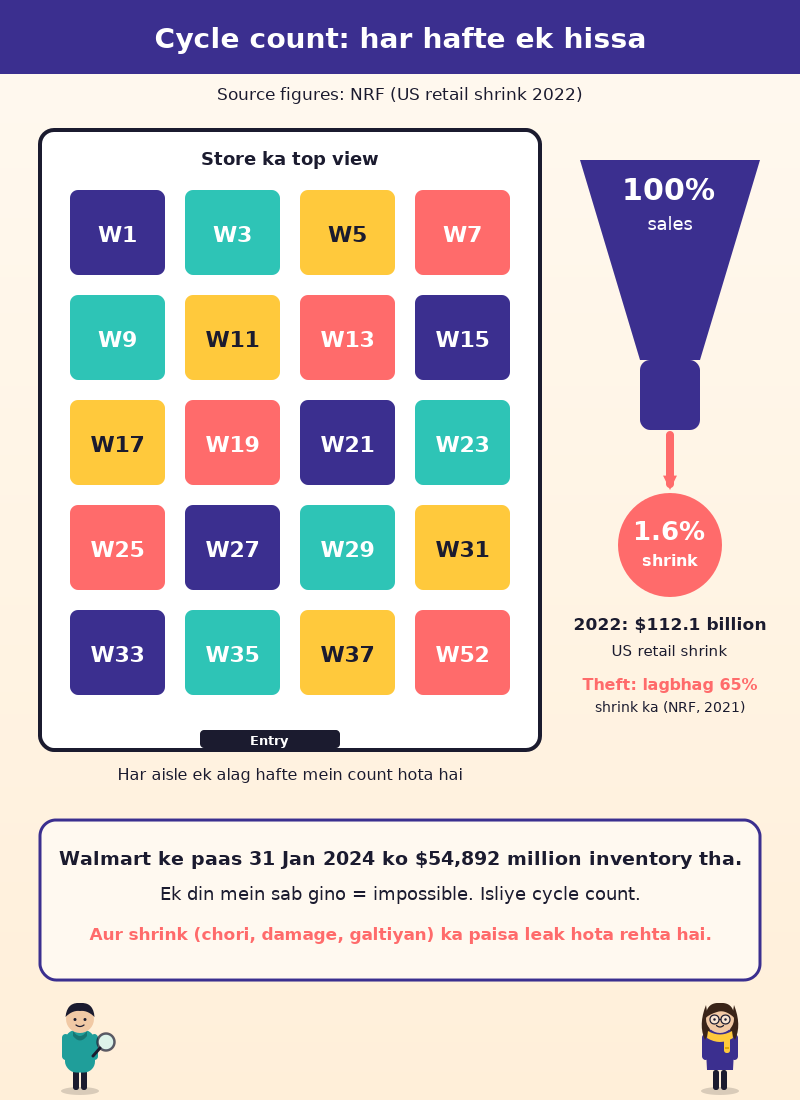
IkshaWalmart lo. Duniya ka sabse bada retailer. 31 January 2024 ko uske paas 54,892 million dollars, yani lagbhag 54.9 billion dollars ka inventory tha apne stores aur warehouses mein. [src]
PrabhatItna maal kaun ginega?
IkshaExactly. Hazaron stores mein lakhon items hain. Har din har item ginna impossible hai. Isliye retailers cycle counting use karte hain: saal bhar mein chhote-chhote samples ke physical counts, rotating basis par, taaki poora stock ek cycle mein cover ho jaye. Auditor bhi year-end count mein sab kuch nahin ginta; woh selected stores aur selected items ke test counts karta hai aur store team ke counts se milata hai.
PrabhatAur agar gina hua aur books mein likha alag nikle to?
IkshaWoh difference shrink kehlata hai: chori, damage, counting errors, supplier fraud sab mila kar. America ke retail industry ka shrink 2022 mein 112.1 billion dollars tha, total retail sales ka average 1.6%. [src]
PrabhatPehle se zyada hai?
IkshaHaan. 2021 mein yeh 93.9 billion dollars aur 1.4% tha. Aur shrink ka lagbhag do-tihai (65%) hissa internal aur external theft se aata hai. [src]
PrabhatYeh survey kitna bada tha?
Iksha177 retail brands, jinki 2022 sales mila kar 1.6 trillion dollars thi, aur 97,000 se zyada stores. [src]
PrabhatToh auditor ka sample yahan kahan aata hai?
IkshaTeen jagah. Ek, physical count ke test counts mein. Do, shrink estimate mein: stores sample counts se poori chain ka shrink project karte hain. Teen, high-risk categories par focus: jahan shrink historically zyada, wahan sample bada. Sampling ke bina retail audit ho hi nahin sakta.

3. Core idea: teen levels mein poora chapter

6 saal ka bachha box (ek line): Sabko check na kar sako to achhi tarah bikri hui muthhi bhar lo, par muthhi aisi ho jo poori bori jaisi dikhe.

Normal: Audit sampling population ke har unit ko selection ka chance dekar representative sample par tests lagati hai, aur result se population ke baare mein conclusion nikalti hai. Sahi selection method, sahi size, aur results ka honest projection: yeh teen sampling ke stambh hain. Sampling risk ko samajhna aur control karna auditor ki skill hai.

PhD box: SA 530 sampling design, size, selection aur evaluation govern karta hai. Statistical sampling risk quantify karti hai; non-statistical judgment par chalti hai. Tests of controls attributes sampling dete hain, substantive details variables/MUS. Sample mein mili misstatement ko project karke tolerable misstatement se compare karna mandatory evaluation step hai, aur anomalies ko projection se alag treat karna hota hai.


4. Real example: Retail inventory - jab ginti mumkin nahin

Problem. Walmart ke paas 31 January 2024 ko 54.9 billion dollars ka inventory tha. [src] Ek auditor subah se raat tak gine, tab bhi ek store ka ek hissa cover hoga.

Solution: systematic sampling + cycle counts. Retail chains saal bhar cycle counts chalaati hain: har hafte kuch stores, kuch aisles, kuch items physically gine jaate hain. High-value aur high-theft items zyada baar gine jaate hain. External auditor year-end par selected locations mein rehta hai, apne test counts karta hai, aur unhe company ke perpetual inventory records se milata hai.

Shrink: sample se industry estimate. National Retail Federation ka National Retail Security Survey dikhaata hai sampling ka doosra roop: 177 brands ke diye data se poori US retail industry ka shrink estimate hota hai - 2022 mein 112.1 billion dollars, sales ka 1.6%, jismein theft ka hissa lagbhag 65%. [src]

Audit lessons:

  1. Population define karo: kis location ka stock, kis date ka.
  2. Stratify karo: high-value/high-shrink items ko 100% ya heavy coverage.
  3. Count ko observe karo, sirf management ke count sheets par bharosa mat karo (SA 501 ka spirit).
  4. Sample ki galti ko poori population par project karo, tabhi stock figure par opinion banti hai.

5. Infographics
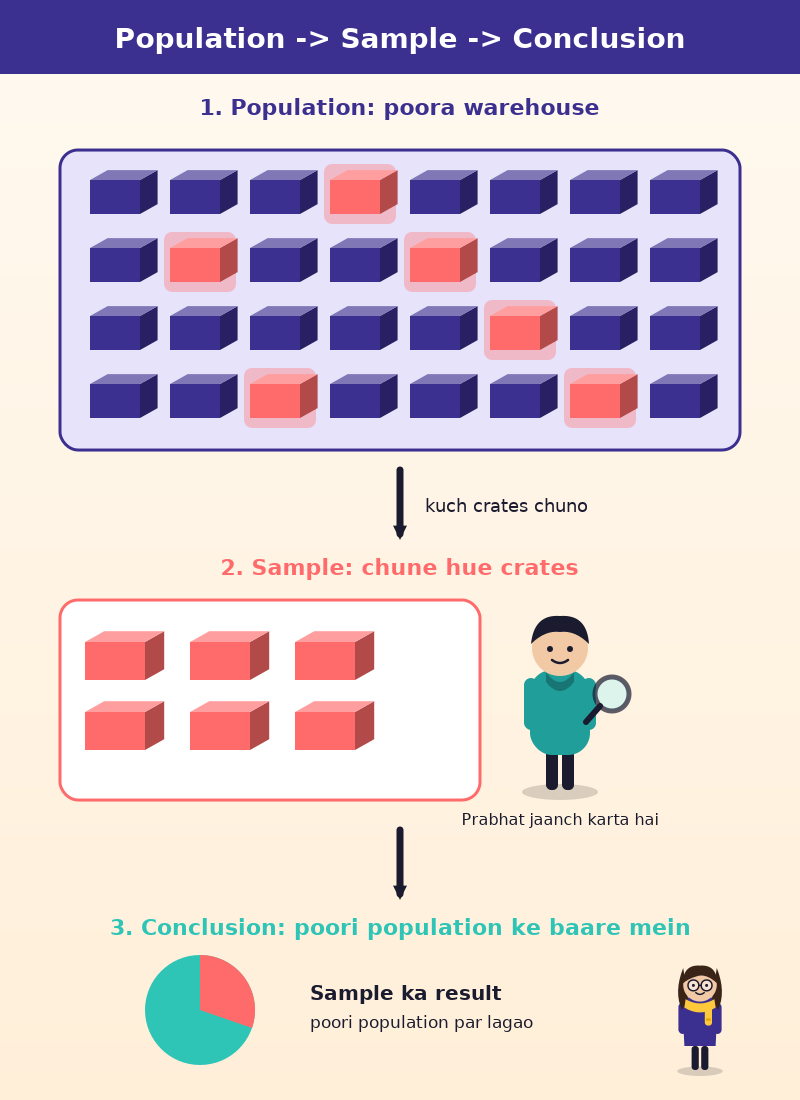
Full-page 3D isometric: ek bada warehouse (population, indigo blocks), usme se kuch highlighted crates (sample, coral glow), magnifying glass ke neeche Prabhat, aur right par pie chart "conclusio
Half-page diagram: sampling risk ke do roop. Left: "sab theek" wali smiley jabki peeche ek red crack (incorrect acceptance). Right: "sab galat" wali frown jabki sab green (incorrec
Half-page selection methods strip: 5 mini-icons - dice (random), ruler marks (systematic), hand picking (haphazard), red-crossed block of boxes (block, not allowed), layered pyramid (stratified). Alt
Half-page slider graphic: sample size ke factors. Risk aur expected error ke slider upar = sample size ka arrow bada; tolerable misstatement ka slider neeche = sample bada. Alt text: factors affecting
Full-page retail cycle count map: ek store ka top-view floor plan, alag aisles alag hafton mein rang-birange (W1 se W52 tak rotating), side par shrink funnel: 100% sales se 1.6% shrink ka coral leak.
Half-page: tests of controls vs substantive tests ka do-raasta diagram, upar se "audit evidence" aata hua, do raaste: sign/approval icons wala raasta (controls) aur invoice/calculator icons

6. Exam angle: UPSSSC kya poochta hai

Sampling se typical sawaal: sampling risk ke types, test checking vs routine checking, statistical vs judgmental sampling, aur kab 100% checking zaroori hai.

Q1. Sampling risk ka matlab hai: (a) Auditor galat procedure chun le (b) Sample population ko represent na kare aur galat conclusion nikle (c) Client fraud kare (d) Records kho jayein Answer: (b). Sampling risk tab hota hai jab sample ka result population ke asli haal se alag ho.

Q2. Transactions ka ek sample deeply check karke baaki ko accept karna kehlata hai: (a) Routine checking (b) Test checking (c) Audit in depth (d) Vouching Answer: (b) Test checking.

Q3. Ek transaction ko shuru se aakhir tak har document par trace karna kehlata hai: (a) Test checking (b) Routine checking (c) Audit in depth (d) Analytical review Answer: (c) Audit in depth.

Q4. Statistical sampling aur judgmental sampling ka main fark: (a) Statistical mein sample bada hota hai (b) Statistical mein selection random aur sampling risk measurable hota hai (c) Judgmental galat hota hai (d) Koi fark nahin Answer: (b).

Q5. Sample size kab badhana chahiye? (a) Jab risk aur expected error zyada ho (b) Jab tolerable misstatement kam ho (c) Dono (a) aur (b) (d) Kabhi nahin Answer: (c).


7. Recap page

10 bullets:

  1. Sampling = population ke har unit ko chance dekar kam items check karna aur poori population par conclusion nikalna.
  2. 100% checking tab karo jab population chhoti ho, kuch items bahut bade hon, ya risk bahut high ho.
  3. Sampling risk ke do khatarnak roop: incorrect acceptance aur control risk ko low assess karna. Dono jhoothi tasalli dete hain.
  4. Non-sampling risk auditor ki apni galtiyon se aata hai; yeh sample bada kar kam nahin hota.
  5. Statistical sampling: random selection, measurable risk. Judgmental: experience based, risk unmeasured. Dono SA 530 mein valid.
  6. Selection methods: random, systematic (random start), haphazard, stratified/value-weighted. Block selection representative nahin, avoid karo.
  7. Sample size ke drivers: risk upar = size upar; tolerable misstatement neeche = size upar; expected error upar = size upar.
  8. Tests of controls (compliance tests) system check karte hain; substantive tests figures check karte hain. Controls strong to substantive kam.
  9. Test checking ka use weak controls ya cash-heavy business mein savdhani se; audit in depth system samajhne ke liye ek transaction poora trace karta hai.
  10. Retail inventory sampling ka best example: Walmart ka 54.9 billion dollar stock cycle counts se chalta hai, aur US retail shrink 2022 mein 112.1 billion dollars (1.6% of sales) tha. [src] [src]

Cheat-sheet table:

Concept Ek line mein Yaad rakhne ka hook
Population Poora set jis par conclusion chahiye Poora bora
Sampling unit Ek test hone wala item Ek daana
Sampling risk Sample jhooth bol de Muthhi mein sada daana na aaye
Non-sampling risk Auditor khud galti kare Aankh kamzor ho
Statistical sampling Random + measurable risk Scientific muthhi
Judgmental sampling Experience se chunna Daadi ki muthhi
Stratification Value ke layers baantna Bade aloo alag tokri
Test checking Sample se poora accept Ek thaali se poori biryani judge
Audit in depth Ek transaction, poora safar Ek aloo ka khet se thaali tak
Tolerable misstatement Kitni galti chalegi Kitne kankad chal jaayenge

Chapter 8 samapt. Pichhla chapter: Vouching aur Verification. Agla chapter: Evidence aur Documentation - auditor ka kagaz ka kaam.